Serving Bloomfield, CT and surrounding areas. (860) 498-9654
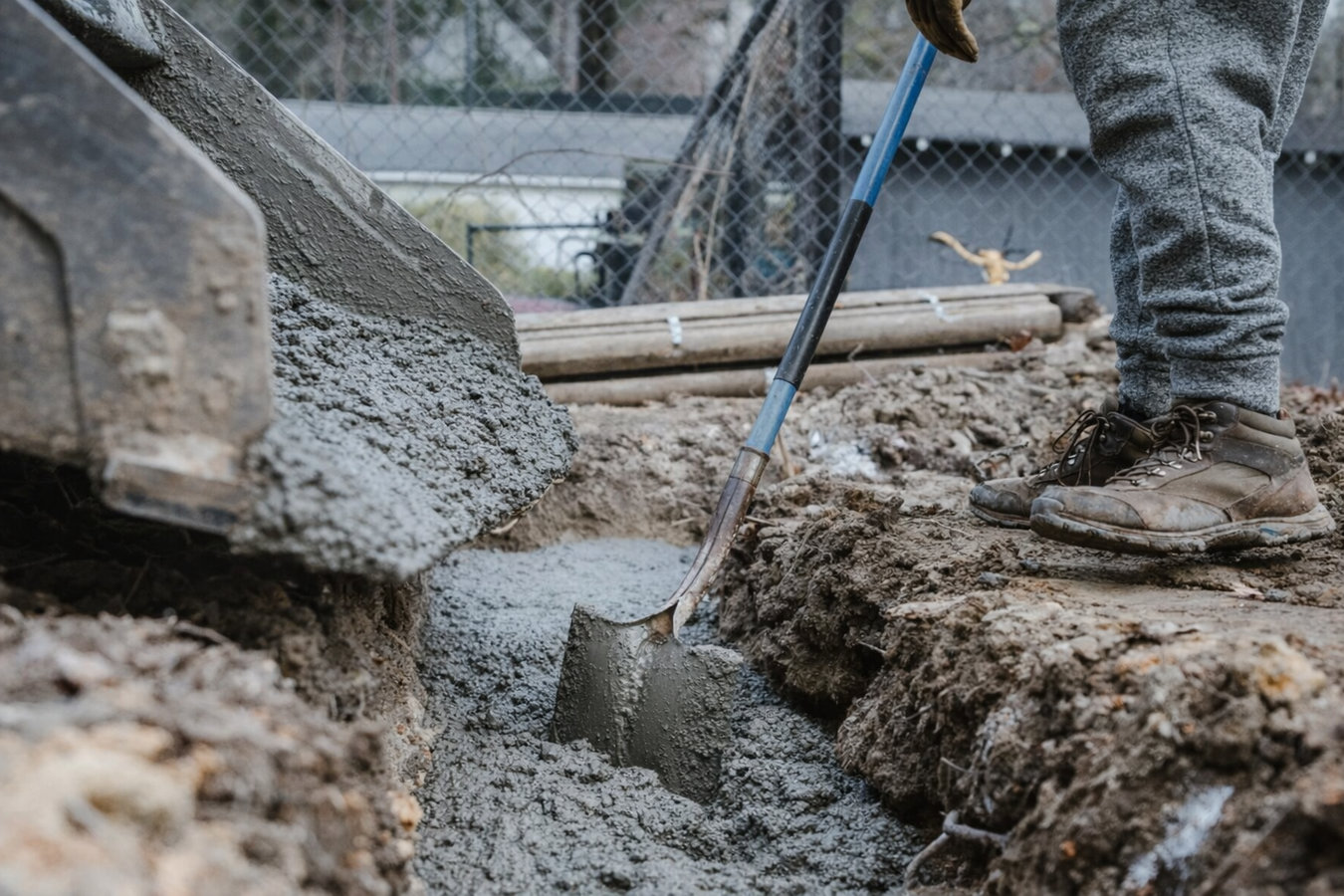
Deck posts shifting after winter? Planning a new addition or garage? We install concrete footings in Bloomfield dug below the 48-inch frost line so your structure stays level and solid for the long haul.
Concrete footings in Bloomfield must be dug at least 48 inches below finished grade to get below Connecticut frost line, most residential projects covering four to six footings for a deck or small addition take one to two days of work plus a five-to-seven-day curing period before framing can begin.
Most homeowners in Bloomfield need footings for one of three reasons: a new deck, an addition, or replacing old footings that have heaved after too many winters. If the existing footings were not dug to the current required depth - common in homes built before the 1980s - they will keep shifting no matter how many times the deck above is releveled. Getting this right starts underground.
If you are planning a larger structure, you may also want to look at Foundation raising or Foundation installation depending on what your project requires. We can walk you through the difference on the first call.
If your deck posts are tilting - even slightly - or a ball placed on the deck surface rolls on its own, the footings underneath may have shifted. In Bloomfield, this is often caused by frost heave: the ground freezing and thawing each winter gradually pushes shallow footings upward. A leaning post means the structure is no longer carrying weight the way it was designed to.
If you can see the top of a concrete tube or block sitting above the ground level, that footing has heaved upward - pushed up by frost over multiple winters. This is common in older Bloomfield homes where footings were not dug to the current required depth. A footing that has heaved once will continue to move, and the structure above it keeps shifting with it.
Diagonal cracks running from the corners of windows or doors, or stair-step cracks in a block foundation, can signal that part of your home footing has settled or shifted. Connecticut clay-heavy soils expand and contract with moisture changes, putting uneven pressure on footings over time. If you notice new cracks or cracks that are growing, have a contractor look before the problem gets worse.
Any new structure attached to or near your home requires footings before framing can begin. Bloomfield Building Department will require footings as part of the permit process, and no reputable framing contractor will build on ground that has not been properly prepared. If you are in the planning stage, footing work is the first conversation to have.
We handle the full footing process - from permit application through the Building Department inspection to the finished pour with anchor hardware set in place. Every hole is dug to at least 48 inches in Bloomfield to comply with the Connecticut frost line requirement. We use tube forms to keep each footing clean and consistent, and we do not pour until the inspector has signed off on the depth and placement.
For homeowners planning larger projects, we also install footings as part of Foundation installation or Foundation raising scopes. If you are not sure which applies to your project, describe what you are building and we will tell you exactly what you need.
Suits homeowners building a new deck or replacing an existing deck with footings that did not go deep enough.
Suits property owners adding a room, sunroom, or detached garage that requires permitted structural support.
Suits homes with heaved or damaged footings from frost action, especially pre-1980s construction in Bloomfield.
Suits any project where the Bloomfield Building Department requires a pre-pour inspection before concrete goes in.
Connecticut frost line is 48 inches - deeper than most of the country, and deeper than the numbers you see in many national how-to guides. Every footing we pour in Bloomfield goes at least four feet down. That is not negotiable here. Bloomfield also sits in Hartford County, where glacially deposited soils can shift from soft loam to dense clay to solid ledge rock within a short distance - sometimes within the same yard. Hitting ledge during digging is more common than most homeowners expect, and it affects cost and timeline. We assess your specific site before quoting so that number does not change once the crew shows up.
A significant portion of Bloomfield residential neighborhoods were built in the mid-20th century, when footing depth standards were different. If your home is older and has an existing deck or addition, there is a real chance the footings under it do not meet today requirements. We work on homes across Bloomfield and in nearby West Hartford, CT and Simsbury, CT, and know what to look for on older properties in this part of Hartford County.
Tell us what you are building and roughly how many footings you think you need. We will ask a few quick questions and let you know if an in-person visit makes sense - which it almost always does. We reply within one business day.
We visit your property to check the soil, note access challenges, and measure where the footings need to go. You receive a written estimate within a few days. We also confirm whether the contractor pulls the permit - and with us, the answer is yes.
We submit the permit application to the Bloomfield Building Department. Once approved, we dig each hole to at least four feet, set tube forms, and schedule the required inspection. The inspector must verify depth and placement before any concrete goes in.
After inspection sign-off, we pour the concrete and set anchor bolts or post bases while the mix is still wet. Placement here is critical - an anchor bolt off by an inch causes problems above. We clean up, hand you the inspection paperwork, and your framing contractor can take over in five to seven days.
Spring construction slots fill up fast once the ground thaws. Reach out now - we reply within one business day and the estimate visit is free.
(860) 498-9654We dig to at least 48 inches on every Bloomfield project - no exceptions. That is the depth Connecticut requires to prevent frost heave, and it is the only depth that keeps your deck, addition, or garage level through the freeze-thaw cycles this climate produces every year.
Bloomfield glacial soils can vary dramatically from one yard to the next - soft loam in one spot, ledge rock a few feet away. We assess your specific site before quoting a number so you are not surprised by additional costs once digging starts. No phone quotes on footing work.
We apply for the Bloomfield Building Department permit and coordinate the pre-pour inspection. When the job is done, you receive the signed inspection paperwork to keep with your home records. The American Concrete Institute sets the standards we work to for concrete mix and curing.
Unpermitted footing work is one of the most common issues that surfaces during a home sale in Connecticut - and it can delay or kill a deal. Every project we complete comes with documentation that the work passed inspection, giving you something to show a future buyer.
Every footing project we take on includes a free site visit, a written estimate, and permit coordination - because those are the things that determine whether your project goes smoothly or turns into a headache. We know Bloomfield soil and building requirements, and we stand behind the work we do here.
Connecticut footing depth requirements are set by the Connecticut Office of State Building Inspector. You can verify contractor licensing through the Connecticut Department of Consumer Protection.
Lifting and releveling settled foundations and structures on Bloomfield properties where the base has shifted over time.
Learn MoreFull foundation pours for new construction and additions on Bloomfield properties, including wall and slab systems.
Learn MorePermit applications and construction dates fill fast once the ground thaws - reach out now so your deck or addition starts on schedule.