Serving Bloomfield, CT and surrounding areas. (860) 498-9654
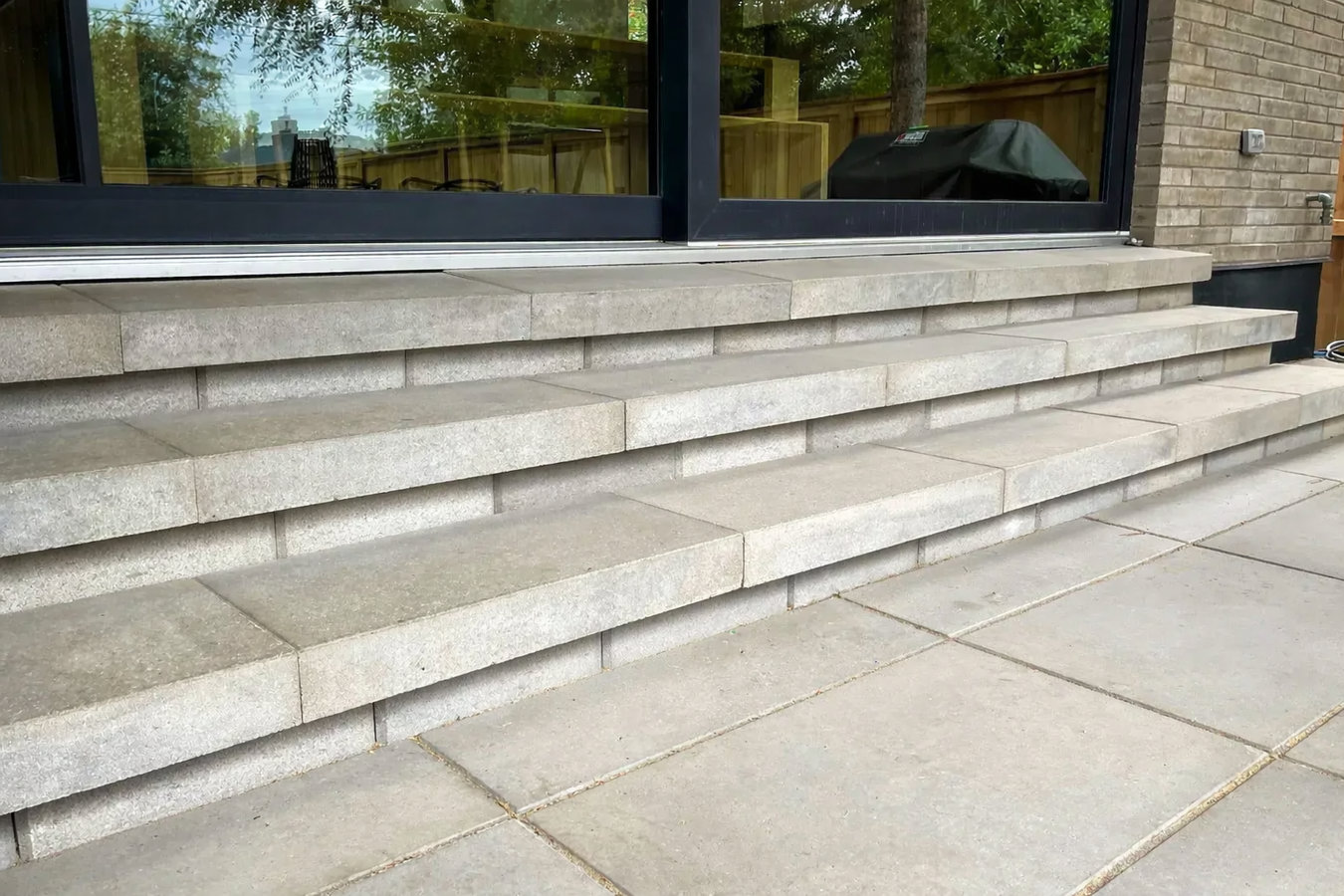
Cracked, uneven, or pulling-away steps are a real hazard every icy morning. We build new concrete steps in Bloomfield that hold up through Connecticut winters and look solid for decades.
Concrete steps construction in Bloomfield means demolishing old steps, preparing a compacted gravel base, building a form to the exact dimensions of your entry, pouring the concrete, and finishing the surface. Most standard three-to-five-step front-entry jobs take one to two days of active work, with careful foot traffic allowed after 24 to 48 hours.
A large share of Bloomfield's homes were built in the 1950s through 1970s, and many of them still have their original steps. Steps that old have been through hundreds of freeze-thaw cycles - Bloomfield's winters push temperatures above and below freezing dozens of times between December and March - and the cracks and settling you see are usually the result of that accumulated stress, not just surface wear. If you are also thinking about the landing or walkway at the base of your steps, our concrete retaining walls service can help stabilize any grading issues around your entry at the same time.
Call or message us to describe what you need. We schedule a free on-site visit, come out to measure, and give you a written estimate. No chasing after quotes - just a clear number and a timeline so you can plan.
If you have filled cracks before and they opened again within a season or two, the damage is deeper than the surface. In Bloomfield's climate, repeated freeze-thaw cycles work on those cracks all winter, and patching only delays the inevitable. When cracks are wider than a pencil or run all the way through the edge of a step, replacement is usually the smarter call.
If any step rocks slightly when you step on it, or the surface sits lower on one side than the other, the base underneath has likely shifted. This is a tripping hazard for anyone using your entry, especially in icy or wet conditions. In Bloomfield's older neighborhoods, this kind of settling is common in steps installed decades ago without a properly compacted base.
Spalling - when the surface of concrete flakes or chunks off - is a sign that water has gotten deep into the material and freeze-thaw damage has taken hold. Once a step starts losing chunks, the structural integrity of the whole staircase is compromised. A rough, pitted surface is also a slip hazard, particularly in wet or icy weather.
If you can see daylight between the back of your top step and the wall of your house, the steps have pulled away from the foundation. That gap lets water pool and drain directly against your foundation wall, which can cause bigger problems over time. It also means the steps are no longer properly supported and could shift further or fail unexpectedly.
We pour poured-in-place concrete steps custom-built to the exact width and rise count of your entry. That means the finished steps integrate cleanly with your foundation, your existing walkway, and the grade of your yard - no mismatched precast units that leave gaps at the edges. Every job includes demolition and removal of the old steps, preparation of a compacted gravel base to prevent future settling, forming, pouring with a freeze-thaw rated mix, and finishing. If you want a texture other than a standard broom finish, we can match exposed aggregate or add a stamped border.
For homeowners whose yard also has slope or erosion issues near the entry, our concrete retaining walls service can be scoped alongside your steps to address those problems in a single project. And if you are replacing steps that connect to a pool area or patio, we coordinate with our slab foundation building team to make sure everything ties in at the right grade.
The right choice when existing steps are cracked through, settling, or pulling away from the foundation - a fresh pour on a properly prepared base.
Ideal for homeowners adding a new front entry, side door, or patio access point where no steps currently exist.
Best for main entries or side entries where a wider staircase improves accessibility or complements a larger landing.
For homeowners who want a broom texture, exposed aggregate, or a stamped edge detail to match an existing driveway or patio surface.
Bloomfield's winters are genuinely hard on concrete. Temperatures swing above and below freezing dozens of times between December and March, and every cycle forces water in and out of any crack or pore in the material. Over years, this turns small surface cracks into structural damage. Much of Bloomfield's residential housing stock dates to the 1950s through 1970s, which means a lot of original steps in town have been through 50 or more of those winters. The glacially deposited soils common in the Hartford County area also shift and settle unevenly over time, which is why steps that were level when they were poured often tilt or pull away from the foundation decades later. A contractor working in this area should assess the base conditions before pouring - not just match the dimensions of what was there before.
We work in neighborhoods throughout Bloomfield, from properties near Windsor on the north side of town to homes closer to the Hartford border on the east. Connecticut's building permit requirements apply in Bloomfield for steps attached to the home, and we handle those permits as a standard part of every job - not an add-on.
Call or message us with the basics - number of steps, width of the staircase, and whether old steps need to be removed. We schedule a free on-site visit to measure the space and look at existing conditions, then give you a written estimate. We aim to reply within one business day.
If your project needs a building permit from Bloomfield's Building Department - which is common for steps attached to the home - we handle the application. This can add a few days to a couple of weeks before work begins, and we factor that time into the schedule and keep you updated.
On work day, we break up and haul away the old steps first. Then we compact gravel or fill material to create a stable foundation - this is the step that prevents settling later. Ask us what we are putting under your new steps and we will walk you through it.
We build the form, pour the concrete, and finish the surface to the texture you have chosen. You can walk carefully on the steps after 24 to 48 hours. The town inspector visits to sign off on the permit, and we walk you through care instructions - no de-icing salts in the first winter - before we leave.
Free on-site estimate, written quote, permits handled. We reply within one business day - call or fill out the form to get started.
(860) 498-9654Settling is the most common reason new steps start tilting within a few years. We compact the gravel subbase before we form and pour, because steps that look great on day one but shift by year three are not a job well done. This is standard practice on every project we take on, not an upgrade.
Connecticut's freeze-thaw cycle is the primary reason concrete steps fail in this region. The mix we use is designed for this climate - it handles the repeated expansion and contraction that cracks standard mixes over time. We also apply a sealer after curing so moisture cannot work its way in before the first winter.
Work on steps attached to the home in Bloomfield often requires a building permit. We apply to the Town of Bloomfield Building Department, coordinate the inspection, and make sure the job is officially signed off before we consider it complete. That paper trail protects you at resale.
We will tell you honestly what we see when we look at your steps and explain the tradeoffs between a patch and a full replacement. Some contractors push for replacement when a repair would do the job. We would rather give you a straight answer than sell you work you do not need. The{' '}National Ready Mixed Concrete Association supports this kind of informed decision-making.
We have done concrete work on homes throughout Bloomfield and the Hartford County area, and we know what these older properties need. Every job comes with a written estimate, a clear timeline, and a contractor who answers the phone. The National Ready Mixed Concrete Association publishes standards for concrete quality that we follow on every pour, including the mixes used for exterior steps in cold-climate regions.
Ground-level concrete slab work for entries, garages, and additions that connects cleanly with new exterior steps.
Learn MoreStabilize sloped or eroding ground near your entry before or alongside new step construction.
Learn MoreBloomfield's construction season fills up fast - reach out now so your steps are done and fully cured before winter arrives.